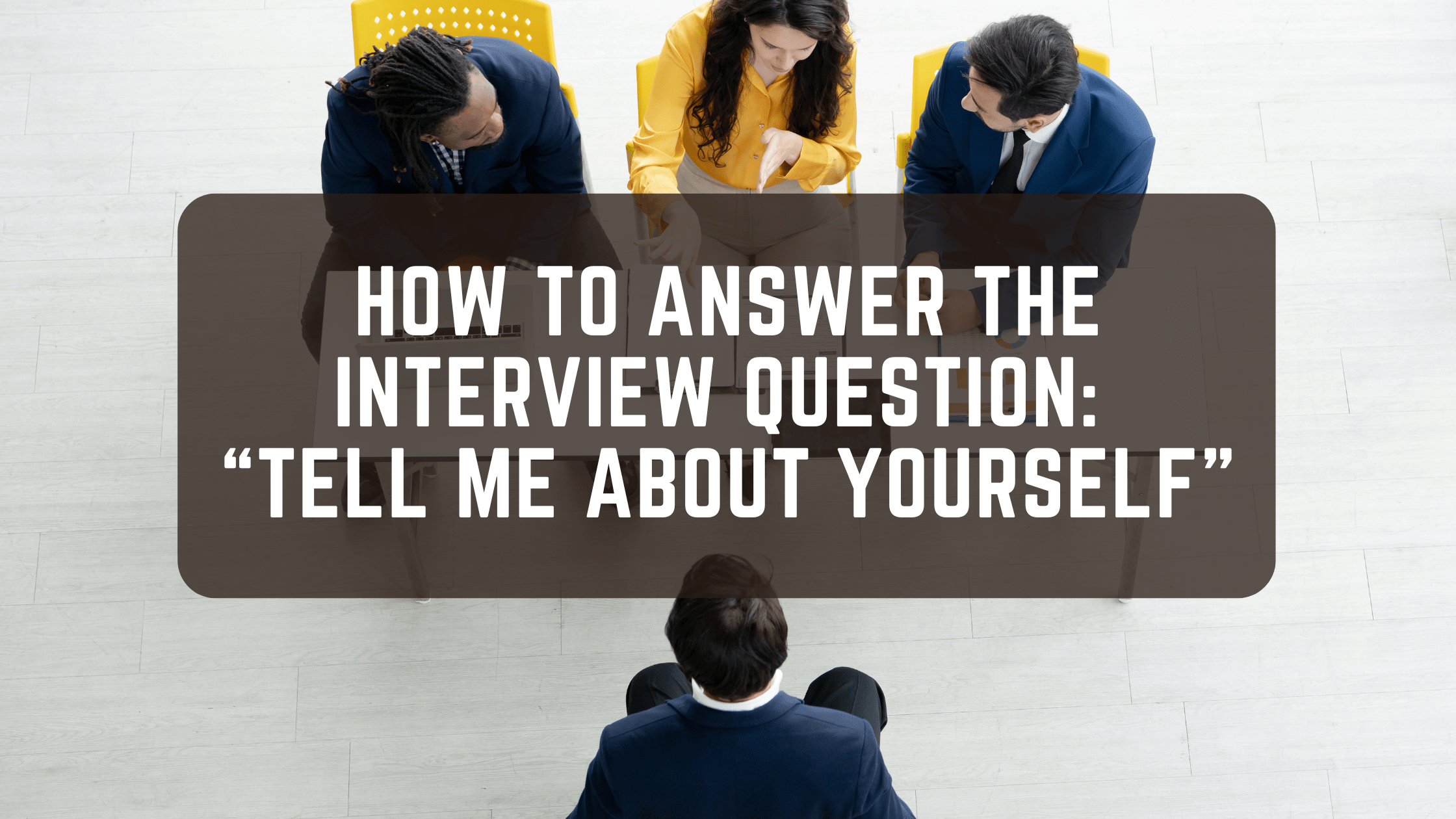
How to Answer “Tell Me About Yourself” Like a Pro
“Tell me about yourself” is often the first real test in an interview. Learn a simple framework to answer confidently, stay relevant, and make a strong first impression.
Adeshina Babatunde
March 21, 2026
Few interview questions seem as simple—and trip up as many candidates—as “Tell me about yourself.” It sounds casual, but it is not small talk. In most interviews, this is your first real answer, which means it shapes the interviewer’s first impression of your communication style, confidence, and fit for the role.
The good news is that this question is highly predictable, and that makes it one of the easiest to prepare for well. A strong answer does not retell your entire life story or repeat your resume line by line. Instead, it gives a focused, relevant summary of who you are professionally, what you do well, and why you make sense for this specific opportunity.
In this guide, you’ll learn exactly what interviewers are listening for, how to structure your response, what to avoid, and how to tailor your answer whether you are a recent graduate, career changer, or experienced professional.
Why interviewers ask “Tell me about yourself”
Most hiring managers are not asking this question because they want your autobiography. They are using it as a quick diagnostic tool. In the first one to two minutes of your response, they are often evaluating several things at once:
How well you communicate under mild pressure
How clearly you understand your own professional story
Whether you can prioritize relevant information
How your background connects to the role
Your confidence, self-awareness, and professionalism
Think of this question as your opening statement. A strong answer helps the interviewer relax because it signals that you are prepared, thoughtful, and easy to follow. A weak answer can create the opposite effect, especially if it is rambling, too personal, or disconnected from the job.
The best answers are concise, relevant, and forward-looking. They explain where you are now, how you got there, and why you are excited about what comes next.
The best structure: Present, Past, Future
If you want a simple framework that works in almost any interview, use the Present, Past, Future structure. It keeps your answer organized and helps you avoid oversharing.
1. Present: Start with where you are now
Begin with your current role, area of expertise, or professional identity. This gives the interviewer immediate context.
For example:
“I’m currently a marketing coordinator at a B2B software company, where I focus on email campaigns, content support, and campaign reporting.”
If you are not currently employed, you can still lead with your professional identity:
“I’m a customer support professional with three years of experience helping SaaS customers troubleshoot issues and improve product adoption.”
2. Past: Highlight the most relevant background
Next, briefly explain how you got here. Mention one or two experiences that show growth, transferable skills, or achievements related to the role.
For example:
“Before that, I worked in retail operations, which helped me build strong communication and problem-solving skills. I moved into digital marketing after completing a certification and taking on campaign work in my previous role.”
This section should be selective. You do not need to cover every job you have ever had.
3. Future: Connect your story to this opportunity
End by explaining why this role makes sense as your next step. This is where many candidates miss an opportunity. Do not stop at your background—show the interviewer why you are here.
For example:
“What interested me about this role is the chance to work on larger multi-channel campaigns and contribute to a team that is clearly focused on growth and experimentation.”
That final connection makes your answer feel intentional rather than generic.
What a strong answer actually sounds like
Here is a polished example for a mid-level candidate:
“I’m currently a project coordinator in the healthcare industry, where I manage cross-functional timelines, vendor communication, and reporting for process improvement initiatives. Over the past three years, I’ve built a strong foundation in keeping complex projects organized and making sure stakeholders stay aligned. Before that, I started in an administrative support role, which taught me how to work in fast-paced environments and pay close attention to detail. I’m now looking for an opportunity where I can take on more ownership and contribute to larger strategic projects, which is one of the reasons this role stood out to me.”
Why this works:
It is clear and easy to follow
It focuses on professional relevance
It shows progression and growth
It ends with a specific reason for interest
In most cases, your answer should be around 60 to 90 seconds. Long enough to provide substance, short enough to keep the interviewer engaged.
How to tailor your answer for different career stages
The exact wording of your response should depend on where you are in your career. The structure stays the same, but the emphasis changes.
For recent graduates
If you are early in your career, focus on your education, internships, projects, and relevant strengths. Employers do not expect a long work history, but they do want to see direction and potential.
Example:
“I recently graduated with a degree in finance, and during school I became especially interested in data analysis and business decision-making. I completed an internship with a regional bank, where I helped prepare reports and worked with Excel to analyze customer trends. I also led a class project where our team evaluated investment scenarios and presented recommendations. I’m excited about this analyst role because it would let me build on those skills in a more hands-on environment and learn from an experienced team.”
For career changers
If you are switching industries or functions, do not apologize for your background. Instead, translate it. Emphasize transferable skills and explain the logic behind your move.
Example:
“I’ve spent the last five years in teaching, where I developed strong communication, organization, and stakeholder management skills. Over time, I found myself especially drawn to the planning and systems side of the work, which led me to pursue project management training and start coordinating school-wide initiatives. Through that experience, I realized I wanted to move into project coordination full-time. This role appeals to me because it combines structure, collaboration, and problem-solving in a way that aligns well with my strengths.”
For experienced professionals
If you have significant experience, avoid trying to summarize your entire career. Focus on your current specialty, major strengths, and the thread that connects your experience to the role.
Example:
“I’m a sales leader with over ten years of experience in SaaS, primarily focused on building and coaching high-performing mid-market teams. In my current role, I manage a team of eight account executives and have helped improve pipeline consistency and close rates through a more structured coaching process. Earlier in my career, I was an individual contributor, so I understand both the frontline and leadership side of sales. I’m especially interested in this opportunity because it combines team development with a strong growth-stage environment.”
Common mistakes that weaken your answer
Even strong candidates can lose momentum by making a few avoidable mistakes. Here are the biggest ones to watch for:
1. Starting too far back
If your answer begins with where you were born or what you wanted to be as a child, you are probably going too far. Keep the focus on your professional story.
2. Repeating your resume word for word
The interviewer can already see your resume. Your answer should add context, not simply list job titles and dates.
3. Talking too long
Rambling suggests a lack of preparation. Aim for a concise answer that invites follow-up questions rather than exhausting the room.
4. Making it too generic
If your answer could apply to any job at any company, it is not tailored enough. Include a sentence that connects your background to this role.
5. Focusing only on yourself, not the employer’s needs
Yes, the question is about you—but the best answers are framed around relevance. Show how your experience can help them.
6. Sounding overly rehearsed
Preparation matters, but memorizing every word can make your delivery stiff. Practice the key points so you sound natural and conversational.
A simple formula you can use to write your own answer
If you are not sure where to begin, use this fill-in-the-blank formula:
Present: “I’m currently a [role/professional identity], where I [main responsibilities or strengths].”
Past: “Before that, I [relevant previous experience], which helped me build [key skills].”
Future: “Now I’m looking for [type of opportunity], and this role stood out because [specific reason].”
Here is what that might look like in practice:
“I’m currently a customer success associate at a software company, where I help onboard new clients, answer product questions, and support account retention. Before that, I worked in hospitality, which gave me a strong foundation in communication, problem-solving, and staying calm under pressure. Now I’m looking for an opportunity where I can take on more strategic client relationships, and this role stood out because of its focus on long-term customer growth.”
This formula works because it is flexible. You can adapt it for almost any role while keeping your answer focused.
How to practice so you sound confident, not scripted
Practice is essential, but there is a right way to do it. The goal is not to memorize a speech. The goal is to become comfortable enough with your story that you can deliver it naturally.
Use bullet points, not a full script
Write down the 3 to 5 points you want to hit. This helps you remember the structure without sounding robotic.
Record yourself
Most people do not realize how quickly they speak, how often they use filler words, or how long they ramble until they hear themselves. A quick phone recording can reveal a lot.
Practice with a time limit
Aim for 60 to 90 seconds. If you are consistently going over two minutes, tighten your examples and remove extra detail.
Customize for each interview
Review the job description and identify two or three priorities the employer cares about. Then make sure your answer reflects those themes.
For example, if the role emphasizes collaboration, analytics, and client communication, your answer should highlight those areas directly.
Prepare for follow-up questions
A strong opening often leads to deeper questions such as:
“Can you tell me more about your current role?”
“What made you decide to change careers?”
“What kind of work are you looking to do next?”
That is a good sign. It means your answer created interest.
Final tips to make your answer memorable
If you want your response to stand out in a competitive interview process, keep these final tips in mind:
Lead with relevance. Put the most job-related information first.
Be specific. Mention real skills, responsibilities, or achievements instead of vague claims.
Show progression. Help the interviewer see how your experience has built toward this role.
End with intention. Make it clear why this opportunity fits your goals and strengths.
Keep it conversational. You want to sound prepared, not performative.
According to employer surveys and recruiter feedback across hiring platforms, communication and clarity consistently rank among the most valued interview traits. That means your answer to “Tell me about yourself” is not just an introduction—it is evidence of how you think and present yourself professionally.
So do not wing it.
Take 15 minutes today and draft your own version using the Present, Past, Future framework. Then practice it out loud until it feels natural. A polished answer can set the tone for the entire interview—and give you an immediate edge over candidates who are still making it up on the spot.
If you’re preparing for upcoming interviews, start with this question first. It is one of the few you can almost guarantee you’ll hear, and one of the most valuable to get right.
You might also enjoy

Smart Questions to Ask Interviewers That Make You Stand Out
10 min read

How to Talk About Your Weaknesses in an Interview Without Losing the Job
9 min read

25 Common Interview Questions and How to Answer Them
10 min read
The Ultimate Guide to Preparing for Job Interviews
9 min read
Comments
No comments yet. Be the first to share your thoughts!
Leave a comment