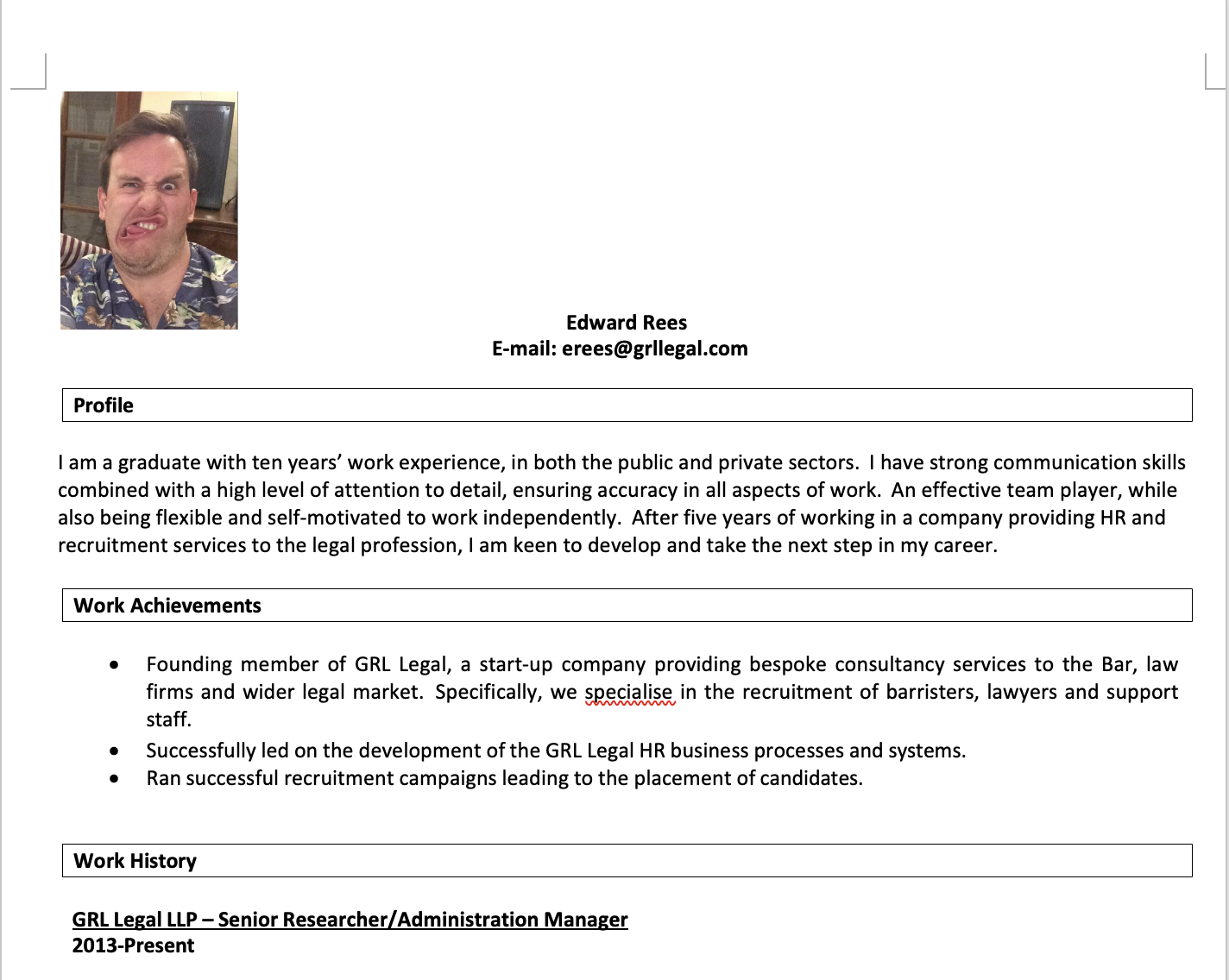
Should You Include a Photo on Your CV? Pros and Cons Explained
Should a photo go on your CV or stay off the page? The answer depends on where you apply, your industry, and the risks involved. Here is how to decide with confidence.
Adeshina Babatunde
March 20, 2026
You have spent hours polishing your CV. The wording is sharp, the layout is clean, and every bullet point earns its place. Then one last question stops you cold: should you add a photo?
It seems like a small decision, but it can carry surprising weight. For some job seekers, a professional headshot feels like a smart way to appear approachable and memorable. For others, it feels risky, unnecessary, or even outdated. And depending on where you live, the industry you work in, and the role you want, the “right” answer can change.
If you have ever stared at that empty corner of your CV wondering whether a photo will help or hurt your chances, you are not alone. The truth is that there is no universal rule. What matters is context. In this guide, we will walk through the pros and cons of including a photo on your CV, explain when it may make sense, when it usually does not, and how to make the best decision for your job search.
Why the photo question matters more than people think
A CV is not just a record of your experience. It is a marketing document. Its job is to help a hiring manager quickly understand who you are, what you can do, and why you are worth interviewing. Every element on the page should support that goal.
A photo can influence first impressions in seconds. That is exactly why the decision matters. In some cases, it may help create a polished, personal brand. In others, it can distract from your qualifications or introduce bias before your skills have had a chance to speak.
Recruiters often spend only a short time on an initial CV review. Various hiring studies and industry reports have long suggested that resume screening is fast, often measured in seconds rather than minutes. That means anything visually prominent, including a photo, can shape attention immediately.
The key question is not “Do photos belong on CVs?” The better question is “Will a photo improve my chances for this specific role, in this specific market?”
When including a photo on your CV can make sense
There are situations where adding a photo is normal, expected, or strategically useful. If you are applying in one of these contexts, a photo may not feel unusual at all.
In countries where CV photos are standard practice
CV conventions vary widely by region. In some countries, including a photo is common and may even be expected. In parts of Europe, Asia, the Middle East, Africa, and Latin America, applicants often attach a professional headshot as part of a standard CV format.
If you are applying internationally, do not assume the rules from your home country apply everywhere. Research local hiring norms before submitting your application. A quick review of local job boards, recruiter advice, or country-specific career resources can save you from making the wrong call.
For roles where personal presentation is part of the job
Some jobs involve public-facing work where appearance, personal branding, or on-camera presence is directly relevant. In those cases, a photo may be more acceptable.
Examples include:
Acting, modeling, and entertainment roles
Hospitality positions in certain markets
Brand ambassador or promotional work
Media, broadcasting, or presenter roles
Some sales or client-facing positions where local norms support it
Even then, the photo should support your professional image, not dominate the document.
When a recruiter or employer specifically requests one
If an application asks for a photo, follow the instruction unless doing so would conflict with local legal protections or your personal comfort level. In this case, the decision has effectively been made for you.
Still, it is worth pausing to confirm whether the request is legitimate. Reputable employers should have a clear reason and a professional application process. If a request feels unusual, vague, or invasive, trust your instincts and investigate further.
The advantages of adding a photo
For the right candidate in the right context, a photo can offer real benefits. These advantages are not universal, but they are worth understanding before you decide.
It can make your application feel more personal
A strong professional headshot can humanize your CV. Instead of appearing as just another name in a stack of applications, you may come across as more approachable and memorable.
This can be especially helpful in relationship-driven industries or smaller markets where personal connection matters.
It can reinforce your professional brand
If your online presence is part of your career strategy, a photo can create consistency across your CV, LinkedIn profile, portfolio, and personal website. That visual alignment can make your brand feel polished and intentional.
Imagine a marketing consultant who uses the same clean, professional headshot across all platforms. The result is not vanity. It is coherence.
It may help in image-conscious or public-facing fields
When presentation is relevant to the role, a photo can provide useful context. For example, a TV presenter, event host, or luxury hospitality candidate may be expected to present themselves in a certain way. In those cases, a photo can function as part of the application package rather than an extra flourish.
It can show confidence and professionalism if done well
A high-quality headshot can signal that you understand professional standards. The phrase “if done well” matters here. A polished photo can help. A casual selfie, cropped party picture, or heavily filtered image can do the opposite.
The disadvantages and risks of including a photo
This is where the decision becomes more serious. While a photo can offer benefits in some situations, it also carries clear downsides. In many hiring markets, these downsides outweigh the potential upside.
It can introduce conscious or unconscious bias
This is the biggest concern. A photo reveals information that should not determine whether you are qualified for a role, including your apparent age, race, gender expression, attractiveness, and sometimes disability or religious identity. Even well-meaning employers are not immune to unconscious bias.
Many companies actively avoid resume photos for this reason. In countries such as the United States, the United Kingdom, Canada, and Australia, it is often considered best practice to leave photos off a CV to reduce the risk of discrimination in early screening.
If a photo gives someone a reason to judge you before they read your achievements, it may be working against the very purpose of your CV.
It can look unprofessional if the photo quality is poor
A weak photo can hurt more than no photo at all. Common mistakes include:
Using a selfie
Choosing a low-resolution image
Wearing clothing that does not fit the industry
Using distracting backgrounds
Applying heavy filters or excessive retouching
Recruiters notice these details. A photo that feels casual or outdated can undermine an otherwise strong application.
It takes up valuable space
Your CV has limited real estate. Every line should earn its place. If you are early in your career, trying to fit achievements onto one page, or applying to roles where skills matter far more than image, a photo may simply waste space that could be used for stronger content.
That space might be better spent on measurable accomplishments, certifications, technical skills, or a sharper professional summary.
It may conflict with employer preferences or ATS practices
Some employers explicitly prefer resumes without photos. Others use applicant tracking systems that are designed to parse text efficiently, not handle graphic-heavy formatting. While a simple image does not always break an ATS, unnecessary design elements can create avoidable issues.
If you are applying through a large online portal, simplicity usually wins.
When you should probably leave the photo off
For many job seekers, this is the most practical section. In the following situations, leaving the photo off your CV is usually the safer and smarter choice.
You are applying in countries where no-photo resumes are the norm
If you are targeting jobs in the US, UK, Canada, or Australia, the standard advice is clear: do not include a photo unless specifically requested. Employers in these markets often prefer applications that focus strictly on qualifications.
You work in a field where skills and results matter most
For roles in software engineering, finance, operations, administration, project management, writing, legal services, and many other professional fields, a photo rarely adds value. Hiring managers in these sectors are usually looking for evidence of competence, not visual presentation.
You do not have a truly professional headshot
If your only option is a cropped social photo or a rushed phone picture against a kitchen wall, skip it. A mediocre image can weaken your credibility. No photo is better than a poor one.
You want to reduce the chance of bias
Some candidates intentionally leave photos off to keep the focus on merit. That is a reasonable and often wise choice. If you want your experience, achievements, and skills to lead the conversation, removing the photo can help.
How to decide: a simple framework
If you are still unsure, use this decision-making checklist. Think of it as a quick filter before you hit send.
Check local norms. What is standard in the country where you are applying?
Review the job posting. Does the employer request a photo or suggest one?
Consider the role. Is personal presentation directly relevant to the job?
Assess the risk. Could a photo introduce bias or distract from your strengths?
Evaluate the quality. Do you have a professional, current headshot that fits your industry?
Prioritize impact. Would that space be better used for achievements or skills?
If you answer “no” to most of the photo-friendly questions, leave it off.
If you do include a photo, follow these best practices
Sometimes the answer is yes. If you decide a photo belongs on your CV, make sure it helps rather than harms.
Use a professional headshot
Your photo should be current, clear, and high resolution. Dress as you would for an interview in your field. A neutral background works best, and your expression should look confident and approachable.
Keep it small and unobtrusive
The photo should support the CV, not dominate it. Place it neatly near your contact details if local norms allow. Avoid oversized images or decorative frames.
Match your online professional presence
If you use LinkedIn, a portfolio site, or a professional bio page, keep your image consistent. This helps create a cohesive personal brand and avoids confusion.
Avoid overediting
Retouching should be minimal. You want to look like yourself on interview day. Authenticity matters more than perfection.
Do not replace substance with style
A strong photo cannot rescue a weak CV. Your qualifications, results, and relevance still do the heavy lifting. The image should be a supporting detail, not the headline.
Better alternatives to adding a photo
If your goal is to stand out, there are often smarter ways to do it than placing a picture on your CV.
Strengthen your professional summary: Open with a sharp, role-specific statement that quickly communicates your value.
Add measurable achievements: Numbers catch attention. Revenue growth, cost savings, project outcomes, and performance metrics are memorable.
Include a LinkedIn profile: This gives recruiters the option to see your photo and broader professional story without forcing it into the CV.
Link to a portfolio: For creative and digital roles, a portfolio often says far more than a headshot ever could.
Tailor every application: Relevance beats decoration. A customized CV almost always outperforms a generic one.
In other words, if you want to be remembered, give employers evidence they can use.
Final verdict: should you include a photo on your CV?
Most of the time, the answer is: it depends, but probably not.
If you are applying in a market or industry where photos are standard, requested, or genuinely relevant, including one can make sense. But in many professional settings, especially in countries that prioritize bias reduction and skills-based screening, leaving the photo off is the safer choice.
The best CVs do not win because they look the most personal. They win because they make it easy for employers to see a strong match. If a photo supports that goal, use it carefully. If it does not, let your experience do the talking.
Before you send your next application, take five minutes to review your CV through the eyes of a recruiter. Ask yourself what each element is doing there and whether it earns its place. That one habit will improve far more than your decision about a photo.
If you are updating your CV now, start with the bigger question: does every section clearly show why you are the right person for the role? Get that right first, and the photo decision becomes much easier.
You might also enjoy

Smart Questions to Ask Interviewers That Make You Stand Out
10 min read

How to Talk About Your Weaknesses in an Interview Without Losing the Job
9 min read
How to Answer “Tell Me About Yourself” Like a Pro
9 min read

25 Common Interview Questions and How to Answer Them
10 min read
Comments
No comments yet. Be the first to share your thoughts!
Leave a comment