The Ideal Resume Length: What Recruiters Really Want
The best resume length is not a one-size-fits-all rule. Learn when one page works, when two pages are better, and what recruiters actually want to see.
Adeshina Babatunde
March 16, 2026
How long should a resume be? It sounds like a simple question, yet it causes outsized stress for job seekers at every level. Some people have heard the old rule that a resume must fit on one page. Others assume that more experience automatically means more pages. The truth is more practical: recruiters do not reward resumes for being short or long. They reward resumes that are easy to scan, clearly relevant, and strong enough to support an interview decision.
That means the ideal resume length is not about following a rigid myth. It is about matching the amount of information to your experience, target role, and industry expectations. In this guide, we will break down what recruiters really want, when one page works best, when two pages are appropriate, and how to trim or expand your resume without weakening it.
What recruiters actually care about
Most recruiters are not measuring your resume with a ruler. They are asking a more important question: Can I quickly understand whether this person is a strong fit for the role? Resume length matters only because it affects readability, relevance, and speed.
Recruiters often review many applications in a limited amount of time. In early screening, they typically look for:
Relevant experience that aligns with the job description
Clear accomplishments rather than vague task lists
Easy-to-scan formatting with logical sections and concise bullet points
Evidence of impact such as metrics, outcomes, or scope
Consistency in dates, titles, and career progression
A resume that is too short can feel underdeveloped if it omits important achievements. A resume that is too long can bury the strongest evidence under unnecessary detail. The ideal length is the one that lets your best qualifications stand out fast.
Recruiters do not want the shortest resume. They want the clearest one.
The one-page resume: when it is the right choice
A one-page resume is often ideal for early-career professionals, recent graduates, career changers with limited directly relevant experience, and applicants with under 5 to 7 years of experience in a straightforward career path.
Who should strongly consider one page
Students and recent graduates
Entry-level candidates
Professionals with a short work history
Career changers highlighting transferable skills
Applicants targeting roles that value concise presentation
For these candidates, one page usually creates focus. It forces prioritization and helps recruiters quickly identify education, relevant internships, projects, skills, and early results.
What a strong one-page resume includes
If you are aiming for one page, include only the information that supports your candidacy for the specific role. A strong one-page resume often contains:
Contact information and a professional headline or brief summary
Recent and relevant work experience
Key accomplishments with measurable results
Education, certifications, and relevant coursework if applicable
Technical skills or core competencies tied to the job
What it should not include is just as important. Avoid outdated experience, generic objective statements, long paragraphs, and a full list of every responsibility you have ever had.
For example, a recent marketing graduate applying for a digital marketing coordinator role does not need a half-page description of a high school retail job. Instead, they should emphasize internship results, campaign analytics, content creation, and tools such as Google Analytics or HubSpot.
The two-page resume: often the sweet spot for experienced professionals
For many mid-career and senior-level candidates, two pages are not only acceptable but expected. If you have substantial relevant experience, leadership responsibilities, technical depth, or a record of measurable achievements, two pages may be the best way to present your value without overcrowding the document.
When two pages make sense
You have more than 7 to 10 years of relevant experience
You have held multiple roles with distinct accomplishments
You are applying for management or specialized positions
You need space to show promotions, scope, and business impact
You work in fields where project detail matters, such as technology, finance, operations, or healthcare
Two pages give you room to show progression and context. A recruiter hiring for a senior operations manager role, for example, may want to see team size, budget ownership, process improvements, and cross-functional leadership. Compressing all of that into one page can make the resume feel vague or incomplete.
How to know if page two is justified
Page two should earn its place. A second page is worth keeping if it contains high-value information such as:
Major accomplishments with metrics
Relevant leadership experience
Important certifications or technical proficiencies
Projects, publications, or presentations tied to the role
Career progression that strengthens your credibility
If page two contains filler, such as old jobs with no relevance, repetitive bullet points, or soft skills with no evidence, it is probably too long.
When a resume can be longer than two pages
Although one to two pages is the norm for most job seekers, there are exceptions. In some cases, a resume longer than two pages is reasonable, especially when the role or industry requires deeper documentation.
Situations where longer resumes may be acceptable
Academic CVs that include publications, teaching, grants, and research
Federal or government applications with detailed requirements
Executive resumes that need to show board work, strategic initiatives, and enterprise-level impact
Highly technical careers with major projects, patents, or specialized credentials
Even in these cases, the same principle applies: include detail because it is useful, not because it exists. Length should reflect relevance and complexity, not habit.
If you are applying through a standard corporate hiring process, though, assume that one to two pages is the safest target unless the employer specifically asks for more.
How to decide the ideal resume length for your situation
If you are unsure whether your resume should be one page or two, use a practical decision framework instead of relying on old rules.
Ask these five questions
How many years of directly relevant experience do I have?
If the answer is under 5 years, one page is often enough. If it is over 7 to 10 years, two pages may be more realistic.
Am I applying for a generalist or specialized role?
Specialized roles often require more evidence of tools, projects, certifications, or technical depth.
Does every section support this target job?
If not, cut or condense anything that does not strengthen your fit.
Can a recruiter understand my value in under a minute?
If your strongest qualifications are buried, the resume may be too dense or too long.
Am I sacrificing readability to force a page limit?
Tiny fonts, narrow margins, and crowded formatting usually hurt more than a second page would.
A good rule of thumb is this: use the shortest length that still allows you to present a convincing, evidence-based case for an interview.
What makes a resume feel too long, even when the page count is fine
Sometimes the problem is not the number of pages. It is the amount of low-value content. A two-page resume can feel sharp and efficient, while a one-page resume can feel cluttered and hard to read.
Common reasons resumes feel longer than they need to be
Job descriptions instead of achievements
Writing “Responsible for managing social media accounts” says little. Writing “Grew organic engagement by 42% in six months across LinkedIn and Instagram” adds value.
Too much old experience
Roles from 10 to 15 years ago usually need only minimal detail unless they are highly relevant.
Redundant bullet points
If multiple bullets say roughly the same thing, combine them.
Generic skills sections
Listing “communication,” “teamwork,” and “hardworking” without proof takes up space without adding credibility.
Long summaries
A summary should be brief and targeted, not a full biography.
How to tighten your resume without losing impact
Prioritize the last 10 to 15 years of relevant experience
Use 3 to 5 strong bullet points per recent role
Lead each bullet with an action and end with a result
Quantify outcomes whenever possible
Remove outdated software, old certifications, and irrelevant hobbies
Tailor content to each target role instead of using one generic version
For example, a project manager does not need to list every meeting they facilitated. They should highlight project delivery, budget control, stakeholder alignment, and measurable business outcomes.
Formatting choices that influence recruiter perception
Resume length is not just about content. Presentation shapes how long a resume feels and how easy it is to scan. Clean formatting can make a two-page resume feel efficient, while poor formatting can make one page feel exhausting.
Best practices for readability
Use clear section headings
Keep bullet points concise and parallel in structure
Leave enough white space so the page does not feel crowded
Use a professional, readable font size
Place the most relevant information in the top half of page one
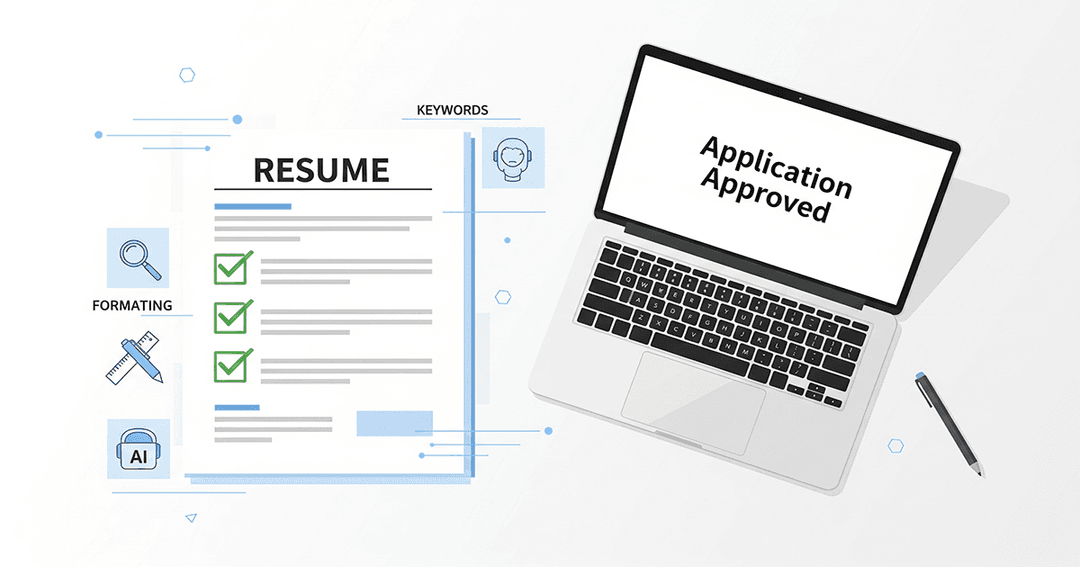
Applicant tracking systems also matter. Overdesigned resumes with columns, graphics, or unusual formatting may not parse correctly. A simple, structured format is usually best for both human readers and ATS software.
A note on tailoring
One of the biggest mistakes job seekers make is trying to create a single “master resume” and send it everywhere unchanged. Recruiters want relevance. Tailoring your resume to the role often naturally solves the length problem because it helps you remove content that does not matter for that application.
If you are applying for a sales manager role, emphasize revenue growth, pipeline management, team leadership, and quota attainment. If you are applying for a customer success role, shift focus toward retention, onboarding, expansion, and client outcomes. The right content determines the right length.
Resume length myths to stop believing
There is a lot of outdated advice about resumes. Let us clear up a few common myths.
Myth 1: A resume must always be one page
This is one of the most persistent myths. A one-page resume is helpful for many candidates, but it is not a universal rule. Experienced professionals often need two pages to present their qualifications properly.
Myth 2: More pages make you look more impressive
Not necessarily. Extra pages only help if they add relevant evidence. Otherwise, they create friction and dilute your strongest points.
Myth 3: You should include every job you have ever had
Your resume is a marketing document, not a full autobiography. Focus on the experience that supports your current target role.
Myth 4: Cutting content makes your resume weaker
In many cases, cutting content makes your resume stronger because it improves clarity and focus.
Conclusion: the ideal resume length is the one that proves fit quickly
So, what do recruiters really want? They want a resume that respects their time and makes your value obvious. For many candidates, that means one page. For many others, especially experienced professionals, two pages is the better choice. What matters most is not hitting an arbitrary page count. It is presenting relevant achievements, clear progression, and evidence of impact in a format that is easy to scan.
If you are revising your resume, start by asking a simple question: Does every line help me earn an interview for this specific role? If the answer is no, trim it. If the answer is yes and you need the space, use it confidently.
Take a fresh look at your current resume today. Cut what is outdated, strengthen what is relevant, and tailor it to the role you want next. The ideal length is not about being shorter. It is about being sharper.
You might also enjoy

Smart Questions to Ask Interviewers That Make You Stand Out
10 min read

How to Talk About Your Weaknesses in an Interview Without Losing the Job
9 min read
How to Answer “Tell Me About Yourself” Like a Pro
9 min read

25 Common Interview Questions and How to Answer Them
10 min read
Comments
No comments yet. Be the first to share your thoughts!
Leave a comment